
Why the World Cup Matters
Like many, I was hesitant about this global tournament - from its size to worsening political realities - but soccer is beautiful. Here's why it matters to this FC Dallas fan.

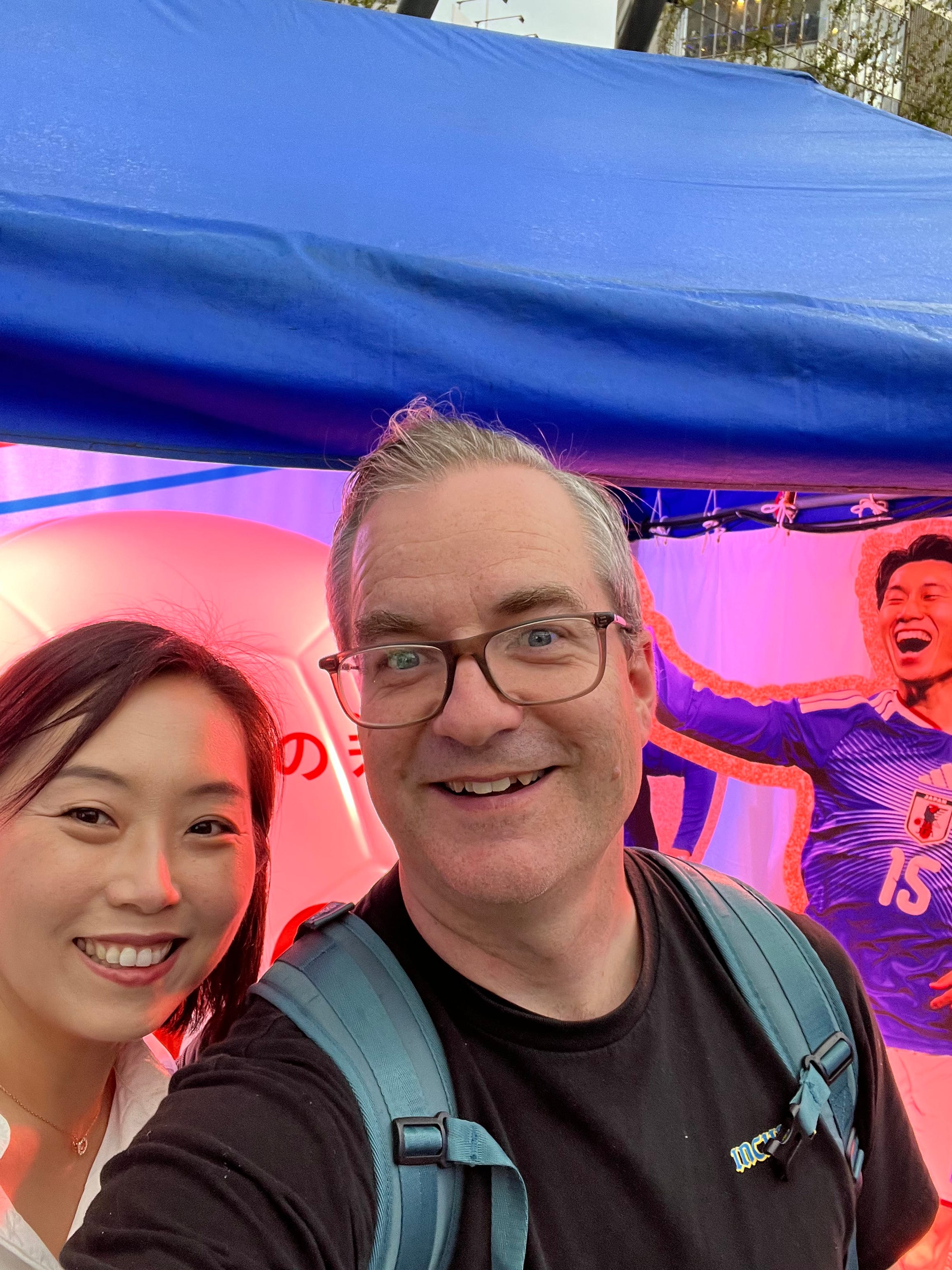
I am back from some needed vacation time, and it was awesome to be in Tokyo and Seoul and watch South Korea and Mexico play in a fierce bout amidst thousands of fans.
Truth be told, I was on the fence about how plugged in I was going to be during this World Cup. Sure, I’d catch the US and a few other teams, especially charting Petar Musa’s progress on this big stage. Now, I am hooked. It’s hard to sit at my desk and get all of my important work — and I do have important work to do — with the tantalizing livestream (in Spanish) of whatever current matchup a finger tip away.
The World Cup is hugely important for the future of soccer in the US, despite a lot of deep-seated problems facing our nation. Many of my neighbors are afraid to go down to the grocery store. A core idea like birthright citizenship, so simple and so important to what this multi-racial democracy/economic national powerhouse has become, was nearly on the chopping block. If the decision had gone another way, it’s possible our USMNT star striker, who is only American because a plane got turned around, wouldn’t be American anymore.
And that decision won’t stop the hollowing out of so many vibrant neighborhoods, with good people just going to work and loving their families… and often producing a bunch of good soccer players, because people in power want this country to be less diverse and more… white.
Which sounds pretty boring to me.
I can’t help but notice that the better teams at the World Cup are looking more and more diverse, because producing good players isn’t a science. You don’t just grow them. They are shaped by their circumstances, by luck, and by having a growing society. You need people from all walks of life, with different ideas and ways of thinking and physical abilities.
And most importantly, you need strong domestic leagues.
On a larger scale though, the moments of drama and heroism that define the individual performances during a World Cup have the potential to inspire all kinds of young people to try out for a sport they may just dabble with. Yes, there are structural barriers that make soccer not so accessible at times. I live in the heart of Southern California’s pristine suburbia, where everything is expensive, including trying out for the highly competitive soccer clubs in the area.
Back in Maryland, I was a coach and helper with a community-based soccer club that had dues of like $70 for a season, where the purpose was just to get the kids on the field to enjoy the game. The fees covered the field rentals. Sure, we had some good players come through, lots of kids from French-speaking Africa, and after they dominated, they’d matriculate to a more competitive setup. For the majority of kids, it was just about getting them out there under the lights with a ball and a few goals and have fun. I wasn’t a great coach, but it was so much fun. Those kids were awesome.
When we moved to California, I was sort of excited to get my son to try out in something more competitive. We showed up for a couple of try-outs, including for some sort of Liverpool-connected outfit, and while he worked his butt off, he also didn’t impress the coach when he reached up and caught a ball rocketing toward him with his hands. He is now a starting offensive lineman for his high school football team, a sport that he really loves and better suits his skills and instincts.
Developing the next generation of superstars, however, is not what a good soccer culture is even about. It’s about community. It’s about a game that is fun and can be played with just a ball, some cones, and a field. It’s about fans who live and die with bated breath on every pass, every shot, every gritty tackle.
More than players, fans are made during these World Cups. I became an FC Dallas fan, because Landon Donovan stunned everyone with that late goal against Algeria in 2010. I was living in Dallas at that time, watching a sketchy, blurry feed in hopes that the United States Men’s National Team would do something special. I think I closed my browser window in frustration in extra time, resigned to defeat. And then was stunned when I saw the final score.
I made a commitment to support Major League Soccer that day and the growth of a sport I loved even when I didn’t get to play it beyond my youth years in Oklahoma. Initially, I chose to watch the Los Angeles Galaxy because of Landon Donovan’s heroics, but when I found a broadcast game of the Galaxy against FC Dallas, this player named David Ferreira enchanted me. Heck, the way Schellas Hyndman had his motley squad playing, including a handful of young and promising talents, was far more entertaining than whatever the Galaxy were trying to do.
That led to my first FC Dallas game tickets.
And then a first ever playoff match.
And then writing way too many comments on Big D Soccer’s website as I tried to understand the game, the league, and the intricacies of salary caps and roster rules.
And then contributing a few articles, since I love to write words about stuff I was only beginning to grasp… and now to even working my fledgling side gig as a sports journalist.
These days, I’m especially loving MLS Next Pro and USL Championship for the young talent who are given a chance to keep playing and dreaming of something greater.
It’s been fun… certainly not about the money… but a gift to see the growth of MLS, the rising stars like Ricardo Pepi, and the potential for special moments to manifest in a singular kick.
Today, the US will face off against Bosnia & Herzegovina, and while the US should win, I admit a lot of hesitation. A part of me is ready to be disappointed — the USMNT have disappointed me plenty in the past. But there is also the chance someone else will be inspired - someone returning to this sport, experiencing it for the first time, or watching with wide eyes and imagining themselves suiting up in the Stars & Stripes. There is a chance for coach volunteers and former players and others to be inspired to give back to their communities and help young people experience a game that is simple in ways and profoundly complicated. There is a chance for the next superstar to start their journey or for one of our local clubs to get a season ticket holder.
So, yeah, the World Cup matters — for a nation that wants to win it all someday, for future talent, for FC Dallas and Major League Soccer and the National Women’s Soccer League and MLS Next Pro and high school sports and youth leagues, for journalists and writers, and even for an image of how society could be better and more diverse and more joyful. We need that, more than ever.
Great post. Thanks.